
One Year After HR 1: What's Happened to SNAP in Texas
On July 4, 2025, HR 1, known as the "One Big Beautiful Bill Act," was signed into law. Among many provisions, it changed how the Supplemental Nutrition Assistance Program (SNAP) operates. A year later, here's what the data shows and what conversations are happening around it.
What the Data Shows
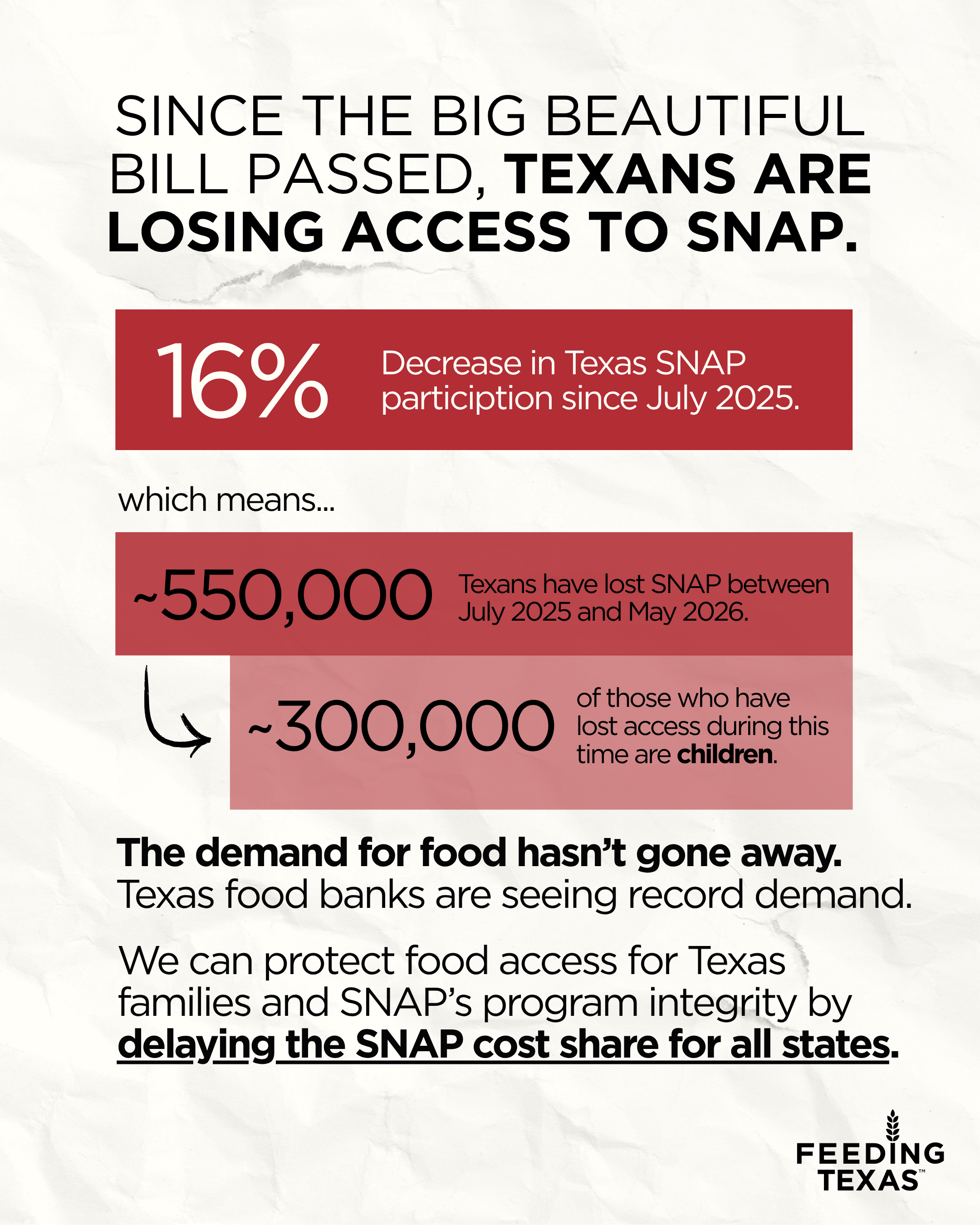
Infographic: Texas SNAP participation dropped 16% since July 2025, about 550,000 Texans, roughly 300,000 of them children.
Texas SNAP participation has declined about 16% since July 2025. That means nearly 550,000 fewer Texans receiving benefits, and more than half of that decline is children: roughly 300,000 Texas kids. Nationally, participation fell an estimated 10%, more than 4 million people, between July 2025 and March 2026. At the same time, Texas food banks report record demand as families face higher prices for basics like milk, beef, and vegetables.
What Changed Under HR 1
The law expanded SNAP work requirements and removed exemptions for several groups: adults ages 55 to 64, parents and caregivers of children 14 and older, veterans, adults experiencing homelessness, and young people aging out of foster care between ages 18 and 24. Under the expanded rules, people in these categories must now meet work requirements to keep benefits. Analysts at Feeding Texas note that many affected individuals are working, but struggle with the reporting deadlines and administrative steps required to document it.
How SNAP and Food Banks Compare in Scale
Texas food banks distribute more than 700 million pounds of food annually through over 5,000 community partners. For context, for every one meal a food bank provides, SNAP provides nine. SNAP is the largest federal nutrition program in the country, and it also functions as economic activity for local grocers, retailers, and agricultural producers.
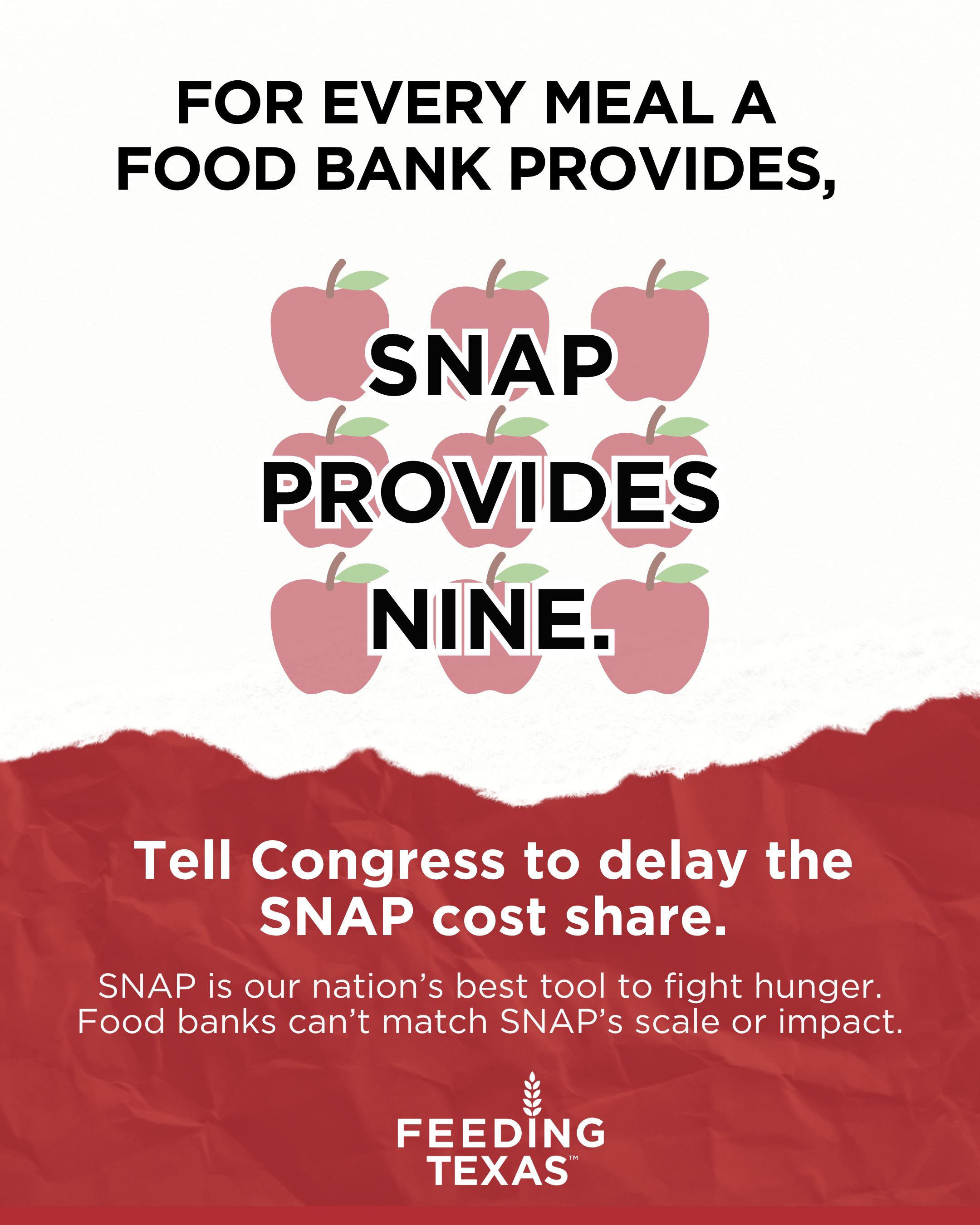
Graphic showing nine apples: For every meal a food bank provides, SNAP provides nine.
What's Scheduled for 2027
HR 1 shifts a portion of SNAP benefit costs to states, a first in the program's 60 plus year history. Beginning October 1, 2027, states with payment error rates above 6% must cover 5% to 15% of SNAP benefit costs. Texas's FY 2025 payment error rate is 9.34%, which means the state could face up to $709 million per year in new costs starting in fiscal year 2028.
What a "Payment Error Rate" Actually Measures
This term is frequently misunderstood, so it's worth defining clearly. A payment error rate is not a fraud rate. It's a statistical measure of how accurately Texas Health and Human Services calculates benefit amounts, in either direction, over or under. Errors commonly result from fluctuating household income, changes in who lives in a home, or shifts in rent and utility costs mid certification.
Timing matters here. HR 1 took effect in July 2025, and the FY 2025 fiscal year closed September 30, 2025, leaving states under three months before the measurement period ended. States can be evaluated on FY 2025 or FY 2026 performance. Before the pandemic, Texas maintained error rates below 6%. Improving accuracy typically requires technology upgrades, staff training, and policy simplification, and those changes take time to implement and measure. Some states with high payment error rates, including Alaska, have already been granted additional time to meet the new requirements.
The Policy Discussion Underway
Feeding Texas, the statewide network of food banks, is asking Congress to delay the SNAP cost share requirement by two years. Their stated rationale is that a delay would give states time to improve accuracy before penalties take effect, apply a consistent standard across all states, allow investment in program integrity, and maintain food access for eligible families during the transition. Supporters of the current timeline argue that accountability measures should not be postponed and that states have had sufficient notice. Both sides describe program integrity and food access as shared goals. The disagreement is about sequencing and timing.
Where to Learn More and How to Weigh In
If you want to read the source material directly, start with Feeding Texas for statewide network data and analysis, the USDA Food and Nutrition Service for official SNAP program information, and Texas Health and Human Services for state administration and eligibility rules.
Whatever your view on the policy, your representatives want to hear from constituents. You can find yours at congress.gov/members/find-your-member. And because the rules changed, it's worth verifying your own eligibility at YourTexasBenefits.com rather than assuming you no longer qualify. If you need food assistance right now, our Social Services thread connects Greater Third Ward families to food pantries, benefit navigators, and emergency resources.
The Cloth shares information so Greater Third Ward families can understand policy changes that affect them and decide for themselves how to respond. Data and materials in this post are drawn from Feeding Texas.